1. About Tan Trao Relics and its historical significance
Tan Trao Relics is one of the most renowned tourist attractions in Tuyen Quang Province. It spans 12 communes within the ATK area (Safe Zone) in Son Duong District and Yen Son District.
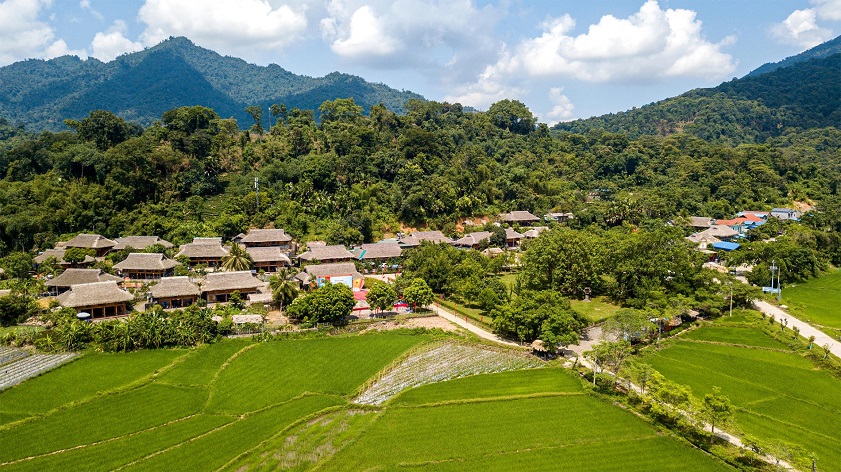
Thanks to its strategic location, Tan Trao was chosen as the headquarters of Vietnamese revolutionary forces during the August Revolution of 1945. It was the site of many key events, including the opening of the National Congress Meeting and the establishment of the National Liberation Committee. From Tan Trao, the call for uprising was issued, leading to localities nationwide seizing power and the success of the August Revolution. The victorious revolution marked the establishment of the Democratic Republic of Vietnam.
From 1947 to 1954, Tan Trao Relics was where President Ho Chi Minh directed the people's resistance efforts against French colonialists. The victories achieved during this period solidified Tan Trao's role as a testament to Vietnam's struggle for independence.
>>> Discover: Tuyen Quang map
2. Important relics of Tan Trao Special National Historic Site
2.1. Na Nua Vestige Complex
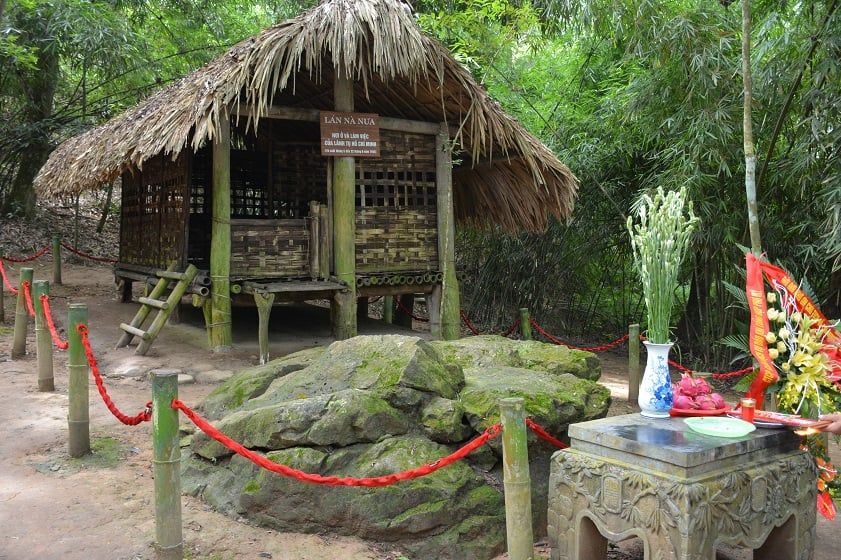
Na Nua Vestige Complex is a fascinating part of Tan Trao Relics. Here, there is Na Nua Hut, a small hut hidden beneath dense foliage on the slopes of Na Nua Mountain. This was where President Ho Chi Minh lived and worked in Tan Trao, Tuyen Quang. Surrounding Na Nua Hut are Canh Ve Hut - the residence of the president’s guards, Dong Minh Hut - a shelter for allies, and Dien Dai Hut - a communication hub between the local forces and allies.
2.2. Tan Trao banyan tree
The Vietnam banyan tree is a symbol deeply connected to Vietnamese villages. In Tuyen Quang, there is a particular banyan tree which carries profound historical significance - Tan Trao Banyan Tree, located about 500 meters away from Tan Trao Communal House. Under its shade on August 16, 1945, General Vo Nguyen Giap officially launched the August Revolution nationwide. Immediately afterward, the Vietnam Liberation Army held its departure ceremony in the presence of the people in Tan Trao.
2.3. Tan Trao Communal House
Tan Trao Communal House is closely tied to a pivotal event that laid the groundwork for the success of the August Revolution. Here, the National Congress approved the plan for a nationwide uprising, adopted ten major policies, and officially established the national flag and national anthem. Beyond its historical significance, Tan Trao Communal House is also an ancient temple known for its remarkable architecture. Built in 1853, it served as a cultural hub for village meetings, fulfilling the cultural needs of the local community.
2.4. Hong Thai Communal House
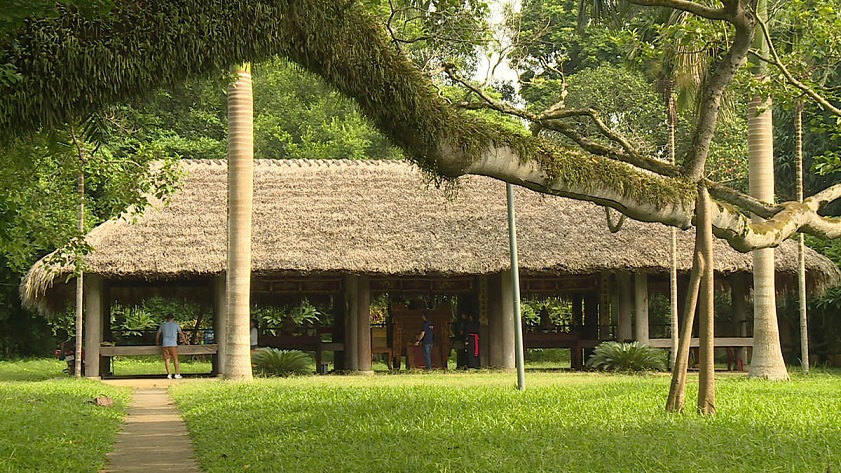
Hong Thai Communal House, built in 1919, follows the traditional stilt-house architecture. It also served as a gathering place for the locals to hold cultural activities and traditional festivals. Historically, this communal house was the first stop for President Ho Chi Minh on his journey from Pac Bo to Tan Trao. It also served as a reception point for delegates attending key Party meetings and the headquarters of the Safety Zone’s protecting committee during the resistance.
2.5. Bong Cave Hut
Bong Cave Hut in Tan Trao Relics was where President Ho Chi Minh directed the Border Campaign of 1950 and the second National Congress in 1951. Located midway up Bong Mountain, the cave overlooks the winding Pho Day River. This location offers visitors a chance to delve into history while enjoying picturesque scenery.
2.6. Kim Quan Relic Site
Kim Quan Relic Site stretches across forests, encircled by the Pho Day River. This strategic location ensured the secrecy of Vietnam's revolutionary activities. The site was home to the Central Party Office, the Government Office, the residence of President Ho Chi Minh, and the residences of other leaders such as General Secretary Truong Chinh. Here, visitors can explore a network of underground shelters dug deep into the mountains. It was also where Deputy Prime Minister Pham Van Dong departed to attend the Geneva Conference.
2.7. Nguyen Tien Su’s House
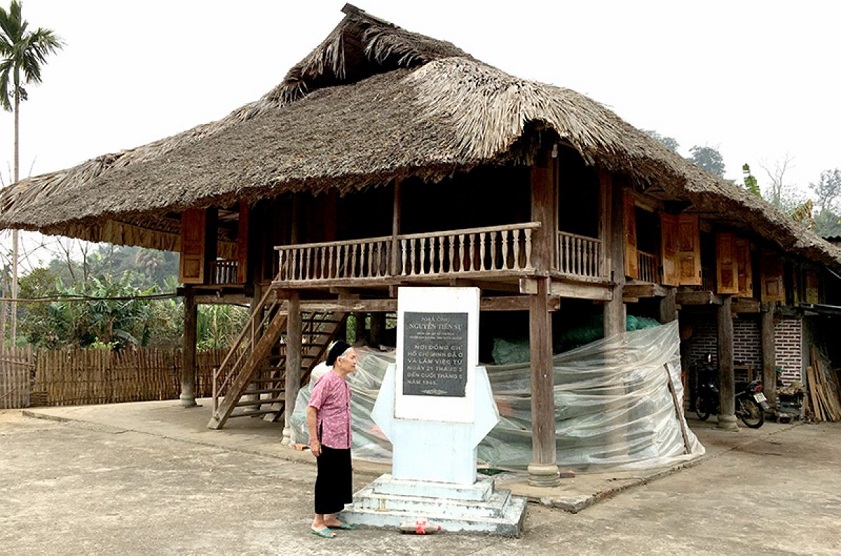
The house of Nguyen Tien Su - Chairman of Viet Minh in Tan Lap Village - was where President Ho Chi Minh stayed before relocating to Na Nua Hut. Here, tourists can hear stories about the president’s care for the people in the village, such as buying notebooks for Su’s children, spending time visiting the fields, and building dikes. In addition to its historical significance, the house also holds architectural values as an exemplary traditional stilt house of the Tay ethnic group in the region.
2.8. Ton Duc Thang’s House
Ton Duc Thang’s House was where Ton Duc Thang - Chairman of the National Assembly’s Standing Committee, lived and worked from late 1952 to 1954. This wooden stilt house is situated next to the Pho Day River, surrounded by lush vegetation that facilitated secret communication. Adjacent to the house is a safety bunker dug deep into the slopes of Chi Lien Mountain.
2.9. Central Police Department
From April 1947 to September 1950, this site served as the headquarters of the Central Police and other units tasked with protecting President Ho Chi Minh and the government. It was restored and re-inaugurated during the 55th anniversary of the Vietnam People's Public Security in 2000.
3. Unmissable experiences at Tan Trao Relics, Tuyen Quang
At Tan Trao Special National Historic Site, tourists are encouraged to join the tour "Return to the Roots" for a guided exploration. This tour includes visits to the following attractions: Revolutionary Pioneer Memorial Site - Na Nua Hut - Tan Trao Banyan Tree - Tan Lap Cultural Village - Tan Trao Communal House - Hong Thai Communal House - Bong Cave Hut - Presidential Office - Prime Minister’s Office - Trung Yen Relic Site - Kim Quan Relic Site.
In addition to its historical values, Tan Trao Relics offers visitors a variety of other experiences. Here are some suggested activities and their estimated costs:
- Campfire: 1,000,000 VND per group
- Vinh Tan Tea Village tour: 100,000 VND per person
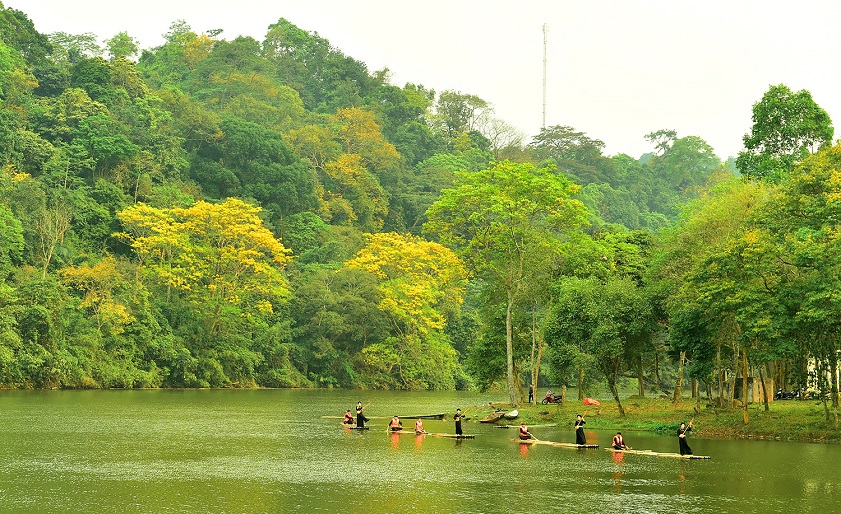
- Boating on Na Nua Lake: 100,000 VND per person
- Herbal foot soak and massage: 100,000 VND per person
- Making bamboo rice, traditional cakes, and five-colored sticky rice: 100,000 VND per person
- Local cuisine tasting: 100,000 - 250,000 VND per person
- Traditional costume rental: 50,000 - 100,000 VND per outfit
- Bicycle rental: 100,000 - 150,000 VND per bike
- Overnight stay in Tan Lap Cultural Village’s stilt houses: 50,000 - 80,000 VND per person per night
*Note: This pricing information is for reference purposes only and may be subject to change over time.
4. Guide for first-time visitors to Tan Trao, Tuyen Quang
4.1. When is the best time to visit?
The most beautiful time to visit Tan Trao Relics is from September to November. During this period, Tuyen Quang weather is cool, with clear skies and no rain. Additionally, it coincides with Tuyen Quang’s Mid-Autumn Festival, which is one of the largest celebrations of its kind in Vietnam.
4.2. How to get there?
Located about 37.5 kilometers away, the trip from the center of Tuyen Quang City to Tan Trao Relics is approximately a 50-minute drive. Here is the route you can take: Vo Van Kiet Road → Trieu Viet Vuong Road → Khuc Thua Du Road → An Hoa Bridge → National Road 37 → National Road 2C → Turn right onto Trang Bridge → Tan Trao Relics.
4.3. What to eat?
Visitors to Tan Trao Relics can immerse themselves in the rich culinary heritage of the Tay ethnic group. The dishes here are diverse and deeply rooted in traditions, featuring ingredients and spices sourced from the mountains and forests. A must-try here is the "Resistance Meal," which includes specialties such as bamboo rice, five-colored sticky rice, vegetable fern, bamboo shoots, black canarium, black pork, hill chicken, stream fish, buffalo meat, and various traditional cakes. These dishes are often served on forest leaves, adding a rustic touch to the dining experience.

Tan Trao Relics offers a profound glimpse into Vietnam's revolutionary history and cultural heritage. This historic site, surrounded by serene landscapes, allows visitors to connect with the nation's past while enjoying its natural beauty. It is a must-see attraction for those seeking understanding of Vietnam's journey to independence.
Besides Tan Trao Relics, visitors in Tuyen Quang can relax and explore at My Lam Mineral Spring, Na Hang, Mo Waterfall, and Nguyen Tat Thanh Square.
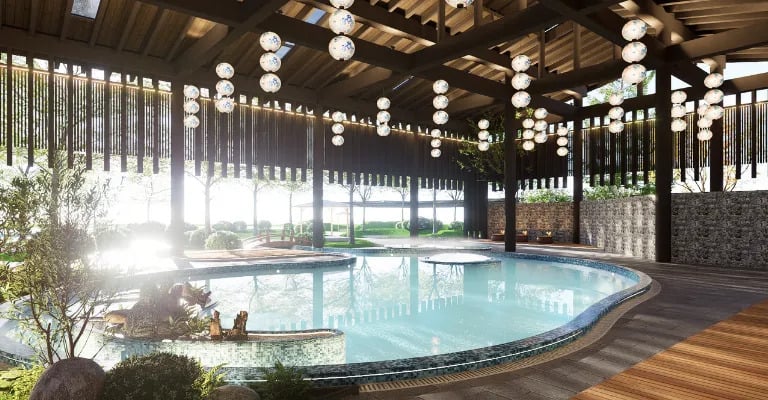
For a relaxing stay in Tuyen Quang, consider Vinpearl Onsen Resort Tuyen Quang, located in the heart of the My Lam hot mineral spring area. The resort combines Japanese-inspired architecture with northeastern scenery and offers 235 rooms, dining, wellness, and event facilities. Guests can also enjoy onsen, golf, leisure, and healthcare experiences within the My Lam complex.
Book your stay at Vinpearl Onsen Resort Tuyen Quang





.png)
.png)