1. Famous landmarks in Vietnam
1.1. Son Doong Cave
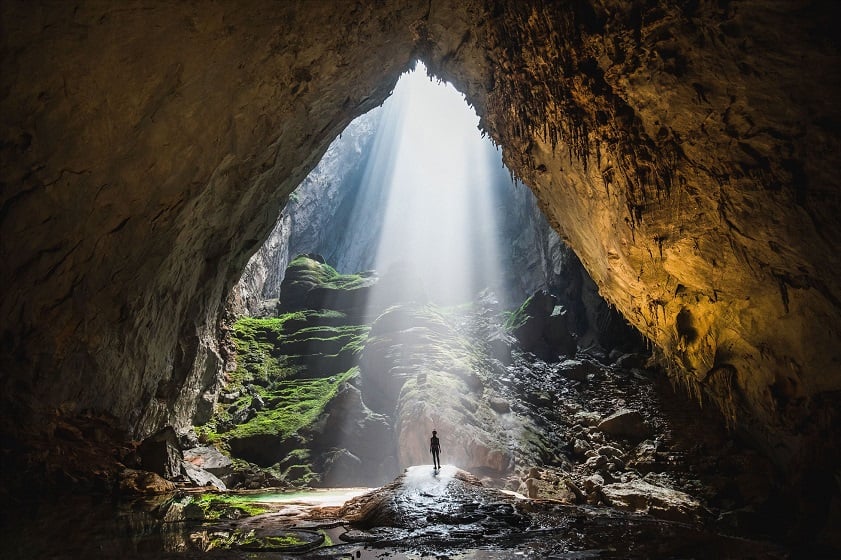
Nestled within Phong Nha - Ke Bang National Park, Son Doong Cave stands as one of the most iconic landmarks in Southeast Asia. It was discovered in 1990 and later recognized as the world’s largest cave with a volume of 38.5 million cubic meters. Formed within a 400-million-year-old limestone massif, it stretches nearly 9 kilometers, with giant passages over 200 meters high and 150 meters wide. Inside, tourists can discover a vast underground realm with towering stalactites, flowing rivers, natural skylights, and even an ancient forest sheltering over 200 plant species. Today, Son Doong offers one of Asia’s most challenging trekking expeditions.
1.2. Hoi An Ancient Town
Hoi An is one of the prominent Southeast Asian landmarks, especially for culture buffs. It was a riverside town which flourished from the 16th century as a busy international port, welcoming traders from China, Japan, and Europe. Its architecture reflects a unique cultural fusion with moss-roofed houses, yellow walls, and colorful lanterns. As a UNESCO World Heritage Site, Hoi An Ancient Town preserves over 1,300 relics, including temples, bridges, and wells. Tourists can wander its peaceful alleys, savor local specialties such as cao lau, or admire centuries-old pagodas. In the evening, you can release lanterns onto the Hoai River.
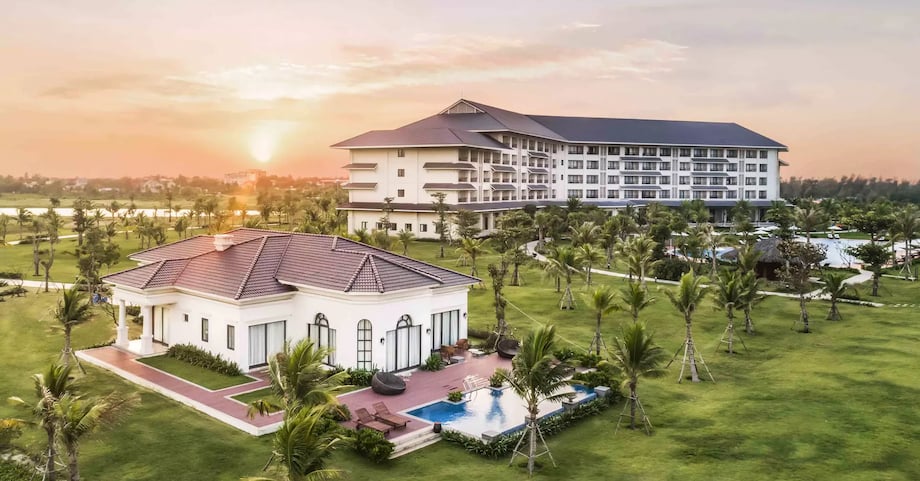
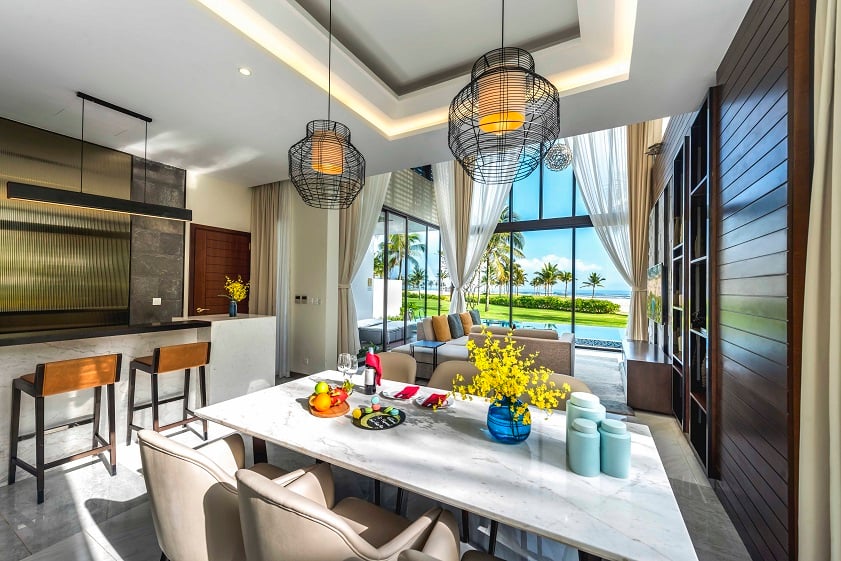
For a memorable stay in Hoi An, choose Vinpearl Resort & Golf Nam Hoi An, a luxurious retreat on Binh Minh Beach with stunning views and classy amenities.
Book rooms in Vinpearl Resort & Golf Nam Hoi An
1.3. Hue Imperial City
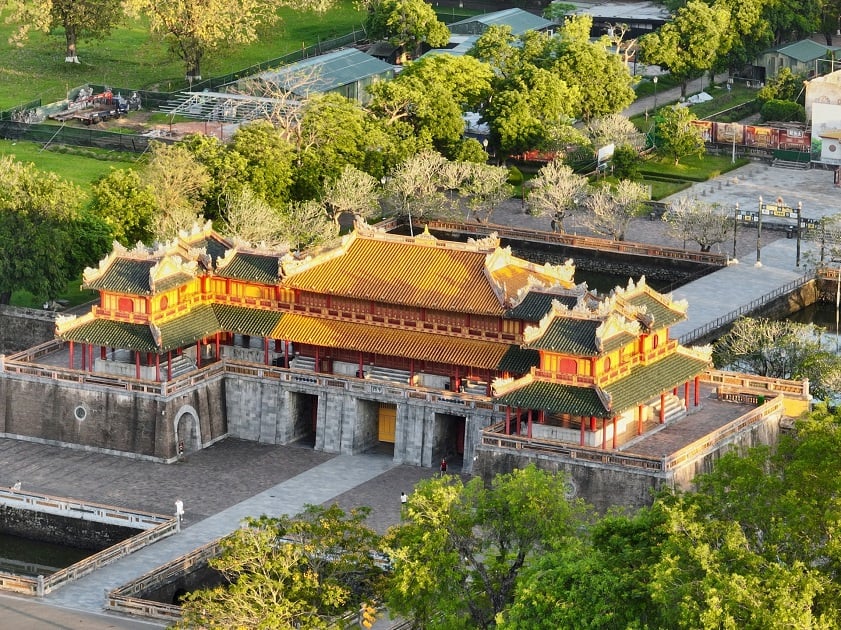
Hue Imperial City, the former capital of the Nguyen Dynasty, is among the most significant landmarks of Southeast Asia. This vast complex includes citadels, palaces, royal tombs, temples, and gardens. The architecture reflects grandeur and solemnity, with golden halls, ornate altars, and majestic mausoleums. Tourists can also explore the Royal Antiquities Museum, which houses thousands of artifacts from ceramics to costumes. Hue also preserves nha nhac - royal court music recognized by UNESCO. A river cruise on the Perfume River, paired with traditional songs and refined dishes, offers an unforgettable cultural experience.
1.4. Ha Long Bay
For natural landmarks of Southeast Asia, don’t miss Ha Long Bay, a UNESCO World Heritage Site in Quang Ninh Province. Here, thousands of striking limestone karsts rise elegantly from jade-green waters. Hidden within are spectacular caves such as Sung Sot and Thien Cung, decorated with shimmering stalactites. Ha Long Bay is also rich in biodiversity, with mangroves, coral reefs, and tropical forests. Today, tourists can enjoy boat cruises, kayaking, swimming, diving, or simply admiring the sunset.
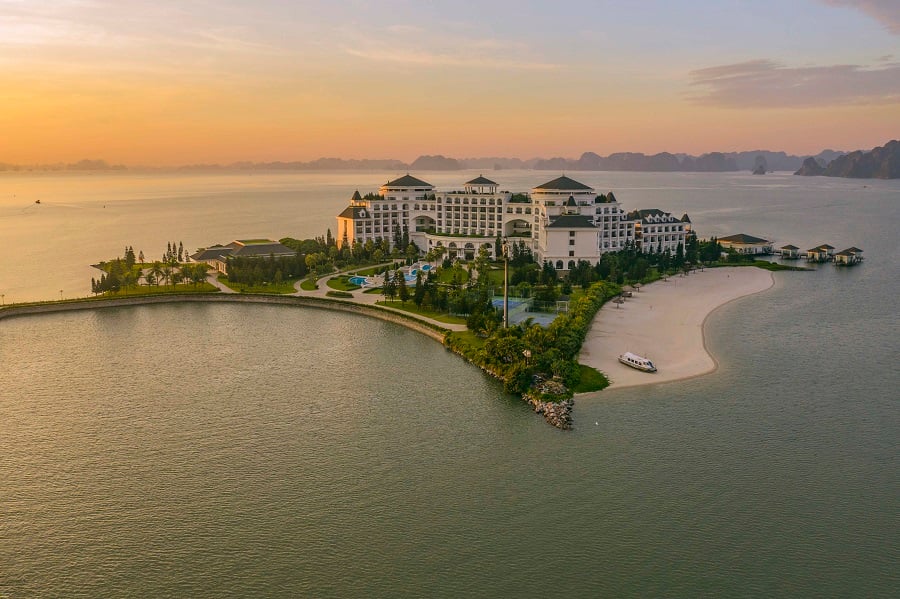
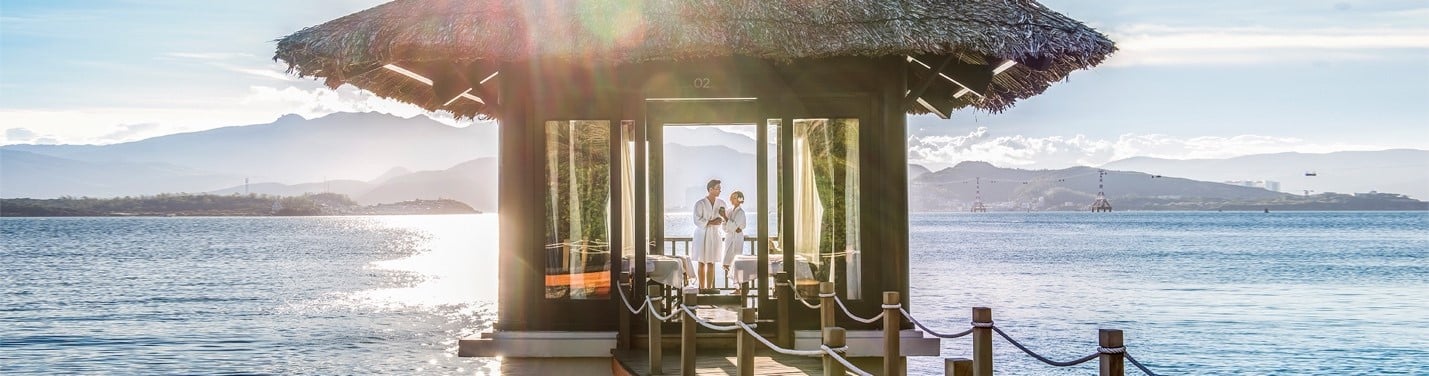
In Ha Long Bay, one of the best Southeast Asian landmarks, tourists can indulge at Vinpearl Resort & Spa Ha Long. Built entirely on the sea, this resort offers refined comfort with panoramic views of the bay.
Book rooms in Vinpearl Resort & Spa Ha Long
1.5. My Son Sanctuary
My Son Sanctuary is a complex of Hindu temples built by the Champa Kingdom from the 4th century onward. Serving as both a religious center and burial ground, it was constructed over a thousand years, reflecting different architectural styles. The site preserves over 70 temples featuring red-brick towers, sandstone carvings, and motifs influenced by Hinduism such as linga. Although partially destroyed by wars, My Son Sanctuary still reflects the grandeur of the Cham civilization. Tourists can admire ancient inscriptions and attend cultural performances, including dances and rituals.
1.6. Cu Chi Tunnels
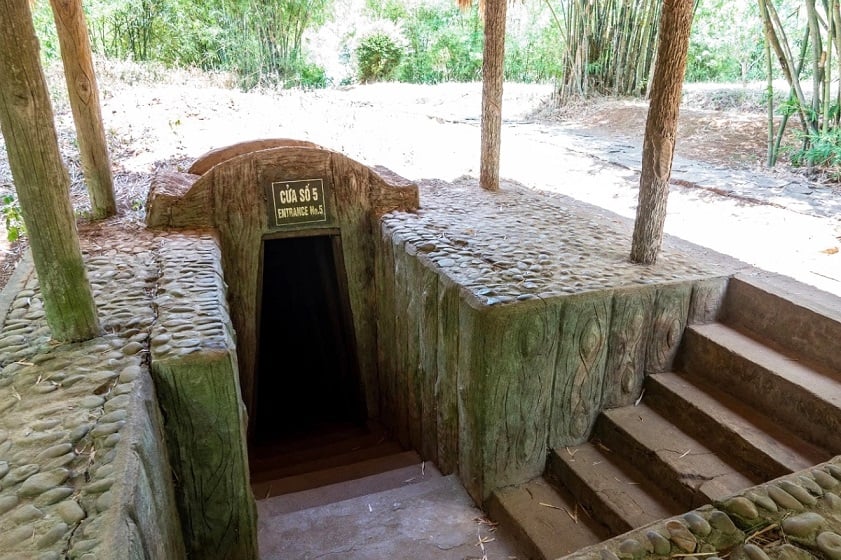
Located about 70 kilometers northwest of Ho Chi Minh City, Cu Chi Tunnels are a symbol of Vietnamese people's resilience during the resistance wars. First built in 1948, these tunnels were gradually expanded into a 200-kilometer underground network with three levels, reaching depths of over 12 meters. They served as shelters, command posts, kitchens, hospitals, and supply depots. Despite bombings, the tunnels safeguarded thousands of soldiers and civilians. Today, tourists can crawl through preserved sections, and see wartime artifacts. The site also features reenactments of liberated villages, a shooting range, and wartime foods like boiled cassava.
>>> Discover 20 famous landmarks in Vietnam that you shouldn’t miss!
2. Famous landmarks in Indonesia
2.1. Mount Bromo
In East Java, Mount Bromo rises within the vast landscapes of Bromo Tengger Semeru National Park. At 2,392 meters, it is not the tallest volcano, but its dramatic setting makes it one of the most famous landmarks in Southeast Asia for nature lovers. With its smoking crater and surrounding “sea of sand,” the scenery is breathtaking. Tourists often hike or ride ponies to the crater rim before sunrise, enjoying spectacular views from Mount Penanjakan with Mount Semeru in the distance.
2.2. Komodo National Park
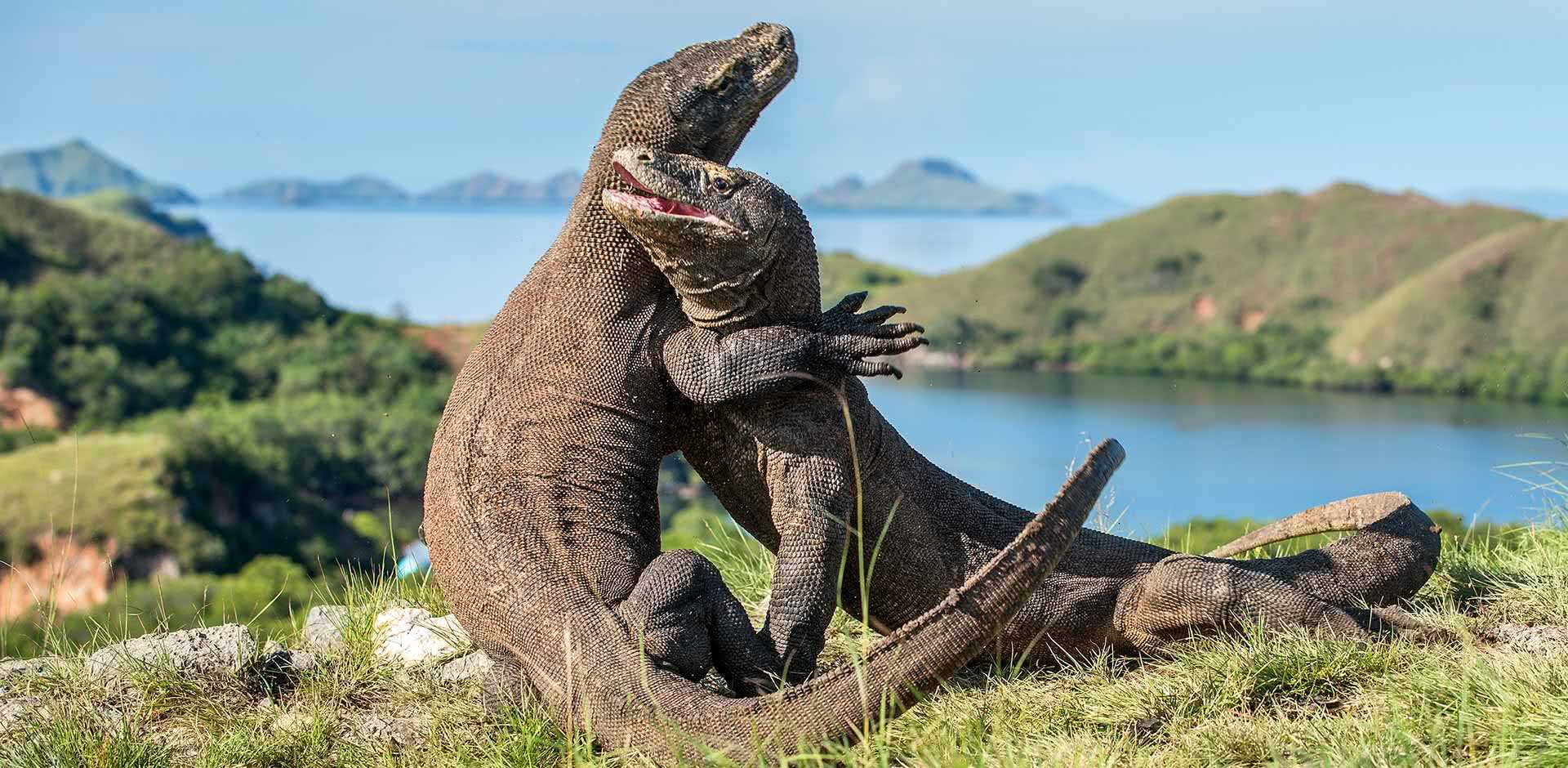
Situated between Sumbawa and Flores, Komodo National Park was established in 1980 to protect the world’s largest lizard - the Komodo dragon. Recognized as a UNESCO World Heritage Site, it covers several islands, including Komodo, Rinca, and Padar. The park is home to over 5,700 species of flora and fauna, along with vibrant coral reefs. Tourists can hike to spot Komodo dragons, sail between islands, or dive in crystal-clear waters. Highlights include Pink Beach, the Padar Island viewpoints, and snorkeling at Manta Point.
2.3. Bali
Known as the “Island of the Gods,” Bali is one of the best honeymoon destinations in Southeast Asia, blending nature, culture, and spirituality. With volcanic mountains, rice terraces, waterfalls, and beaches, this island offers all sorts of stunning landscapes. Deeply influenced by Hindu traditions, Bali is a land of temples, rituals, and artistry. Tourists can soak in Ubud’s cultural charm, surf at Kuta, or hike Mount Batur for a breathtaking sunrise. From yoga retreats and spa resorts to vibrant nightlife, Bali has something for everyone.
2.4. Borobudur Temple
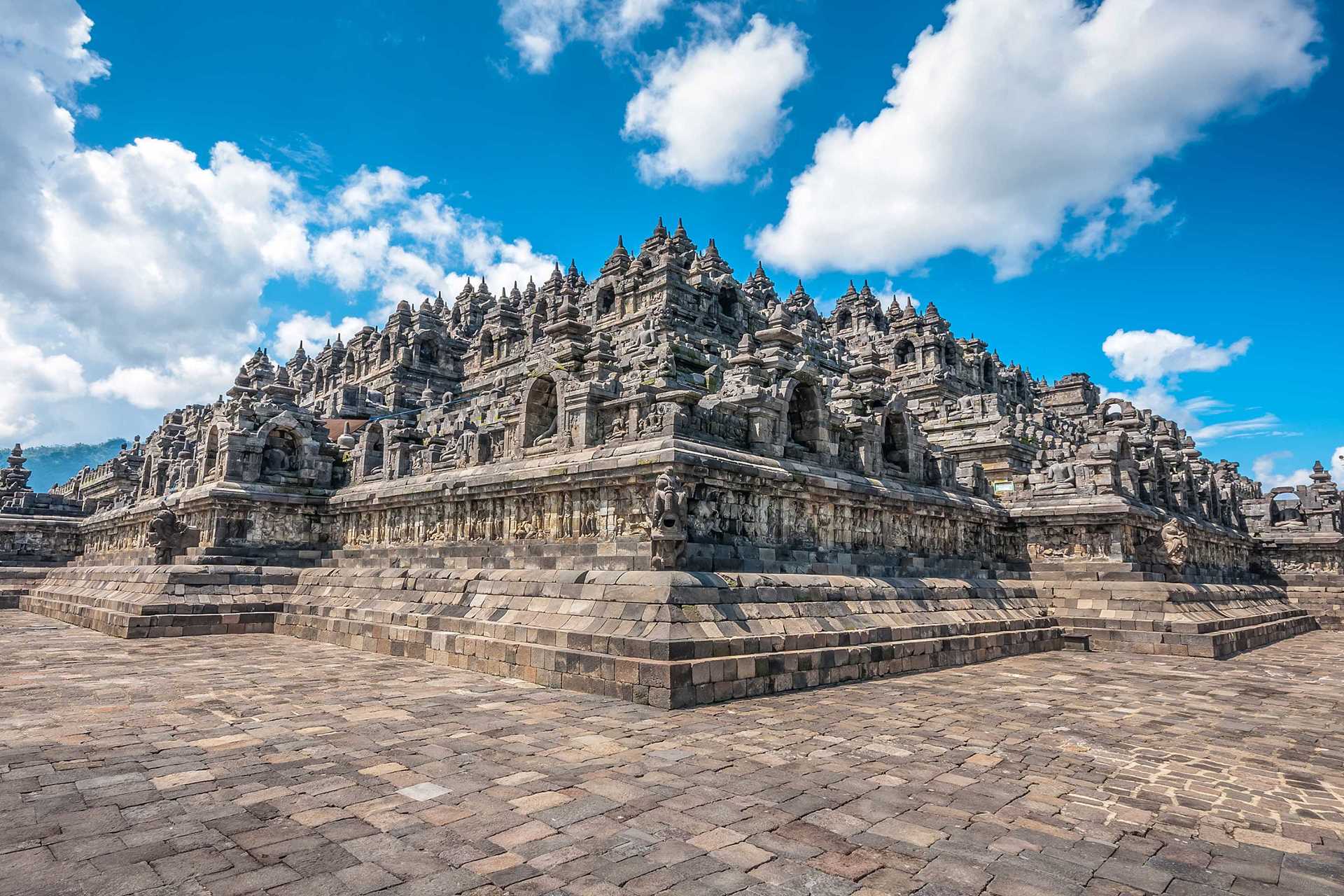
Borobudur Temple (Central Java), the world’s largest Buddhist monument, is among the best religious landmarks of Southeast Asia. Built by the Sailendra dynasty in the 9th century, it reflects both spiritual heritage and artistic mastery. This massive mandala-shaped stupa consists of 10 levels decorated with thousands of bas-reliefs and 72 perforated stupas, each containing a Buddha statue. Tourists can wander by its terraces, admire intricate Buddha carvings, and watch the dawn light up the temple’s silhouette. Nearby, the temples of Pawon and Mendut enrich the experience.
>>> Explore: Southeast Asia travel: An ultimate guide for your first-ever trip in 2025
3. Famous landmarks in Thailand
3.1. Wat Rong Khun
In Chiang Rai, Wat Rong Khun, created in 1997 by Thai artist Chalermchai Kositpipat, stands as both a spiritual gift and a striking work of art. Unlike traditional temples, it features a white façade decorated with mirrors symbolizing purity and enlightenment. Tourists will cross a bridge of rebirth, surrounded by grasping hands that represent desire, before entering the main hall to see murals that blend Buddhist imagery with modern icons. Another highlight here is the Golden Building, which symbolizes worldly greed.
3.2. Ayutthaya Historical Park
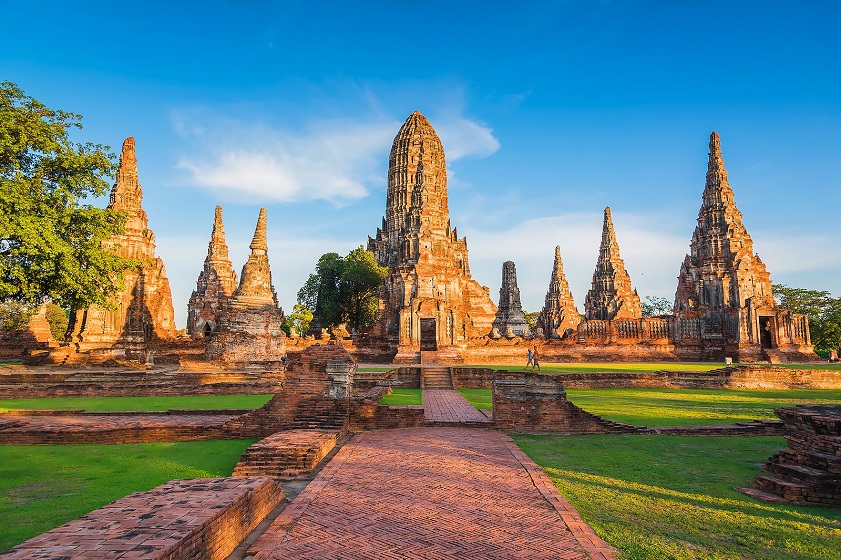
Ayutthaya ranks high on the list of Southeast Asian landmarks for culture buffs, situated 85 kilometers north of Bangkok. Founded in 1350, it served as Siam’s capital for over four centuries until it was destroyed by the Burmese in 1767. Today, its ruins - sprawling across 289 hectares - feature towering prangs, vast monasteries, and iconic temples. Wat Mahathat, with its Buddha head entwined in tree roots, is especially famous. Tourists can explore Wat Ratchaburana, palaces, and museums displaying ceramics and relics.
3.3. Grand Palace
In the heart of Bangkok, the Grand Palace has stood since 1782 when King Rama I moved the capital to the Chao Phraya River’s banks. Spanning 218,000 square meters, the complex houses throne rooms, royal residences, government offices, and sacred temples. Its ornate Thai architecture features gilded roofs, porcelain mosaics, and lotus-shaped pillars. Tourists can admire highlights such as Phra Sri Rattana Chedi, the Coronation Hall, and the Temple of the Emerald Buddha - Thailand’s most revered shrine.
3.4. Wat Arun
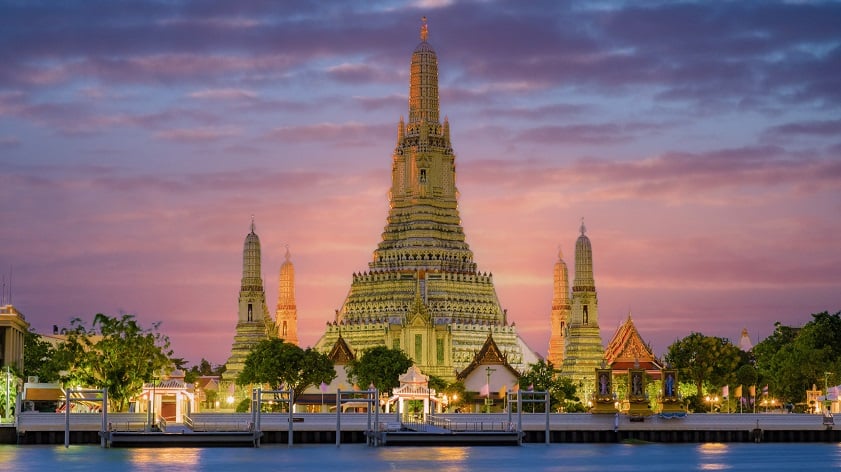
Standing majestically by the Chao Phraya River, Wat Arun is an iconic temple in Bangkok and one of the most popular Southeast Asian landmarks. Named after the Hindu god Aruna, it was restored in the early 19th century under King Rama II. The temple’s central prang rises 70 meters, covered with colorful porcelain tiles and intricate sculptures. Tourists can climb its steep steps for sweeping river views, explore smaller prangs, or enjoy its magical beauty at sunset and night when it is brightly illuminated.
>>> Check out 16 unique festivals in Southeast Asia you should experience once!
4. Famous landmarks in the Philippines
4.1. Banaue Rice Terraces
On the list of landmarks in Southeast Asia, the Banaue Rice Terraces are a must-visit. These rice terraces, carved into mountainsides over 2,000 years ago by the Ifugao people, showcase remarkable ingenuity and a legacy of enduring traditions. Recognized as a UNESCO World Heritage Site, the terraces stretch for miles across the landscape. Tourists can admire panoramic viewpoints, hike to waterfalls such as Tappiyah, or learn about Ifugao culture at Tam-An Village. They remain a living symbol of heritage and harmony with nature.
4.2. Chocolate Hills
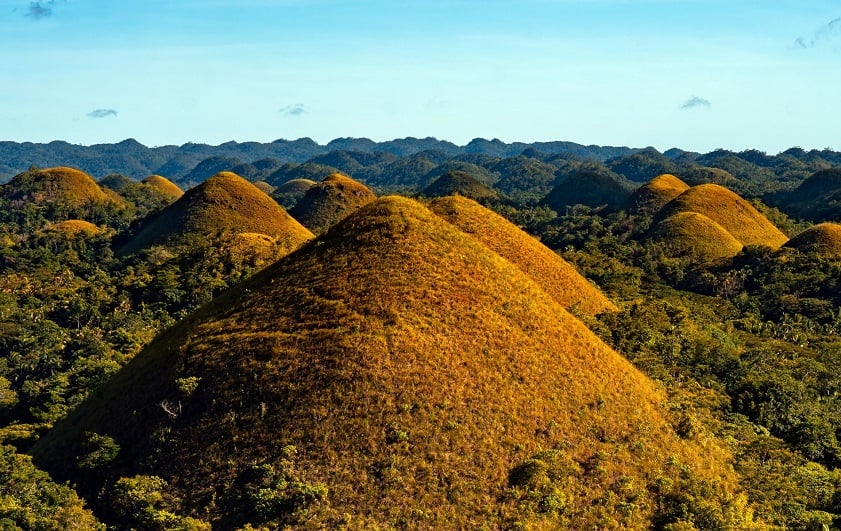
Situated on Bohol Island, the Chocolate Hills are a geological marvel of more than 1,200 cone-shaped mounds spread across 20 square miles. Formed from limestone and shaped through erosion, they turn lush green in the rainy season and chocolate-brown in the dry months - hence their name. These hills are best viewed from the viewpoints of Carmen or Sagbayan. Tourists can also explore the Chocolate Hills Adventure Park, ride ATVs, or enjoy ziplining for a unique perspective of this surreal landscape.
4.3. Baroque Churches
Scattered across Manila, Santa Maria, Paoay, and Miag-ao, the Baroque Churches were built between the 16th and 18th centuries during the Spanish colonial era. Recognized by UNESCO in 1993, these churches represent a fusion of European Baroque design with local materials and motifs. Massive buttresses, ornate façades, and folk-inspired decorations give them a fortress-like, artistic character. Tourists can admire retablos, bell towers, and carvings here. These sacred sites remain active centers of worship and enduring symbols of faith.
>>> More on: Southeast Asia travel itinerary: A comprehensive guide for first-timers
5. Famous landmarks in Singapore
5.1. Marina Bay Sands
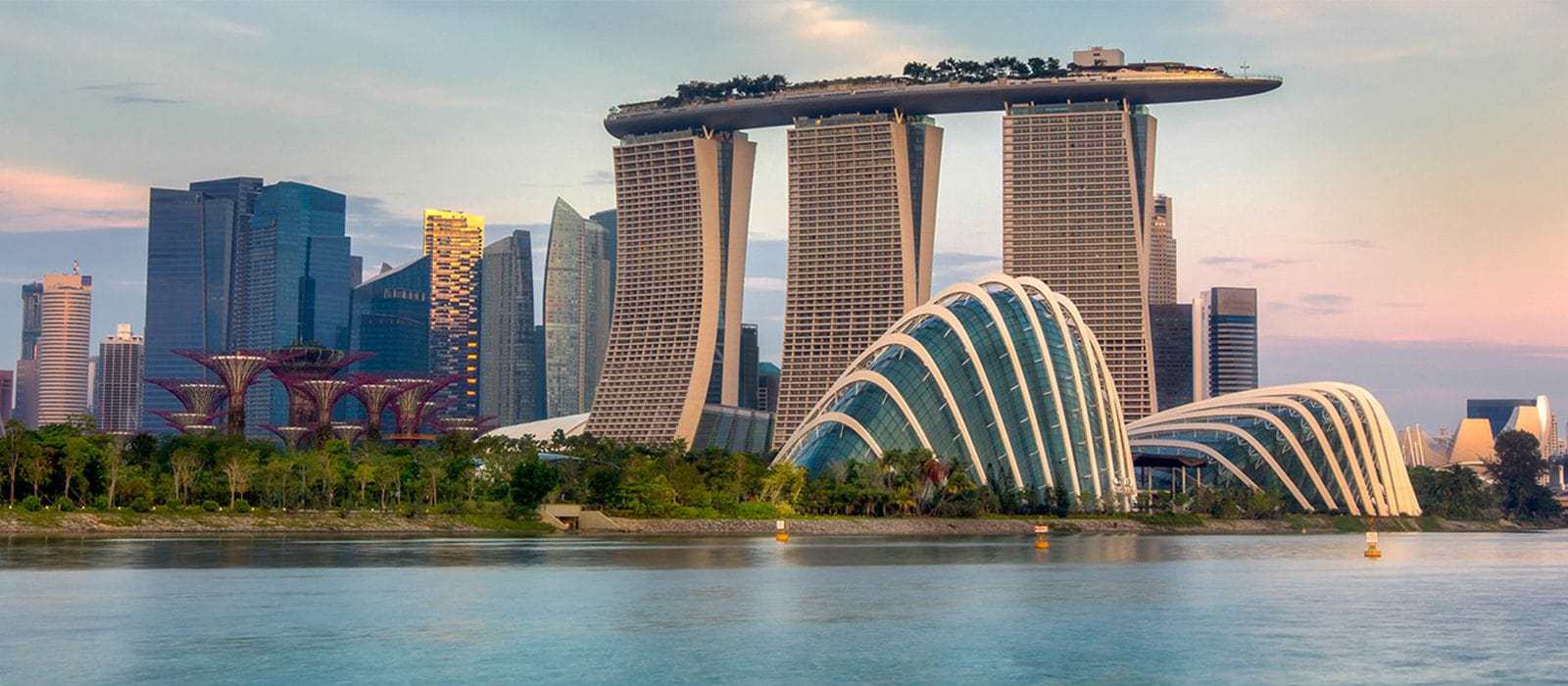
If you are looking for modern architectural landmarks of Southeast Asia, come to Marina Bay Sands, along Singapore’s waterfront. This integrated resort features three 57-storey hotel towers connected by the SkyPark, which houses the world’s largest rooftop infinity pool and an observation deck. Covering 120,000 square metres, it also includes luxury stores, celebrity chef restaurants, a grand theatre, and the ArtScience Museum. Tourists can enjoy breathtaking city views, the nightly Spectra light show, and world-class dining here.
5.2. Gardens by the Bay
Located a short distance away from Marina Bay Sands, Gardens by the Bay is a futuristic park that opened in 2012 to showcase Singapore’s vision of a “City in a Garden.” Its main attractions include the Flower Dome, which is recognized as the world’s largest glass greenhouse, and the Cloud Forest, which houses one of the tallest indoor waterfalls. The dazzling Supertree Grove comes alive at night with the Garden Rhapsody light display. Tourists can stroll along the OCBC Skyway, explore seasonal floral displays, and immerse themselves in the on-site ecosystem.
5.3. Merlion Park
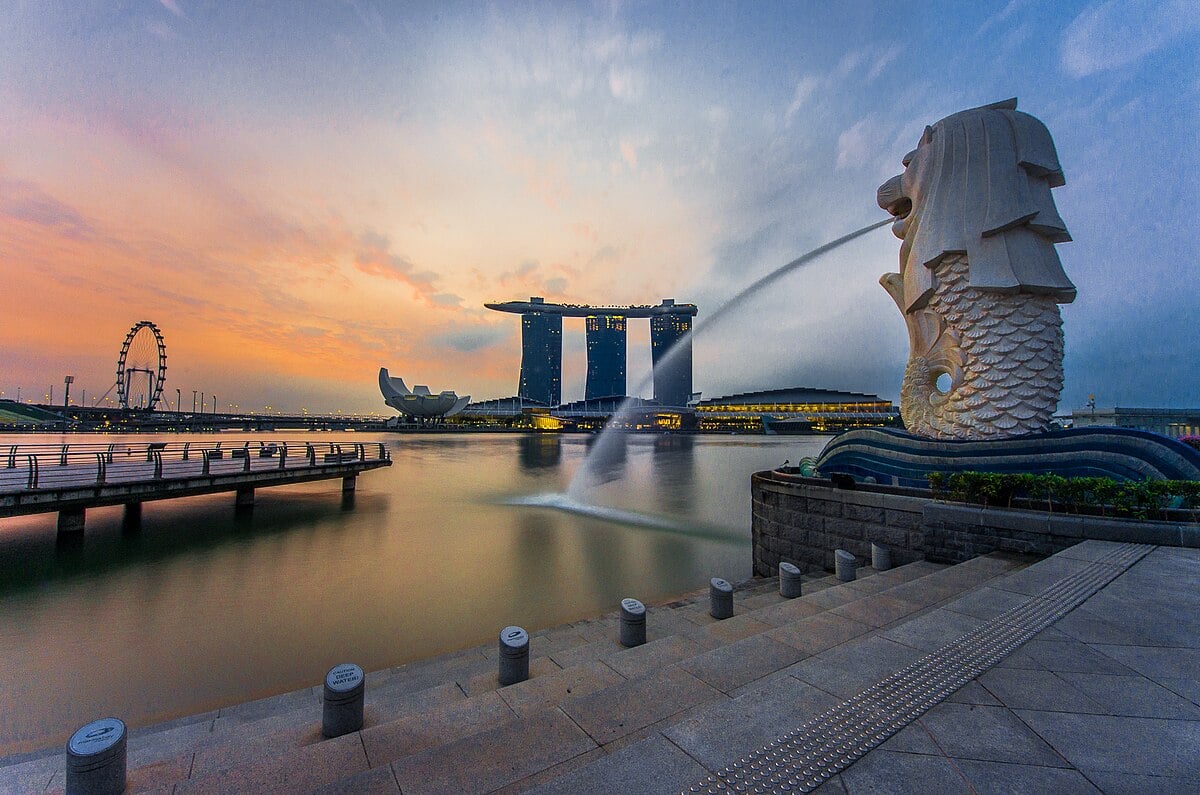
Among iconic Southeast Asian landmarks, Merlion Park lies beside Marina Bay. It is home to Singapore’s most famous symbol - the Merlion statue, which was designed in 1964 and completed in 1972. This mythical creature, with a lion’s head and a fish’s body, represents the city’s origins as “Singapura” and its fishing heritage. The 8.6-meter-tall statue spouts water continuously, symbolizing prosperity. Tourists flock here for scenic views of Marina Bay Sands, the nightly Spectra light show, and relaxing strolls along the waterfront promenade.
>>> Discover the top 21 flavorful Southeast Asian dishes to savor!
6. Other remarkable landmarks in Southeast Asia
6.1. Angkor Wat (Cambodia)
Close to Siem Reap, Angkor Wat, constructed in the 12th century by King Suryavarman II, remains the largest religious monument worldwide. Covering more than 400 acres, this temple complex features lotus-shaped towers, vast moats, and intricate bas-reliefs depicting Hindu mythology and Khmer history. Tourists can marvel at its vast structure, intricate carvings of more than 2,000 apsaras, and breathtaking sunrise views. Today, Angkor Wat remains Cambodia’s proud symbol and a UNESCO World Heritage Site.
6.2. Plain of Jars (Laos)
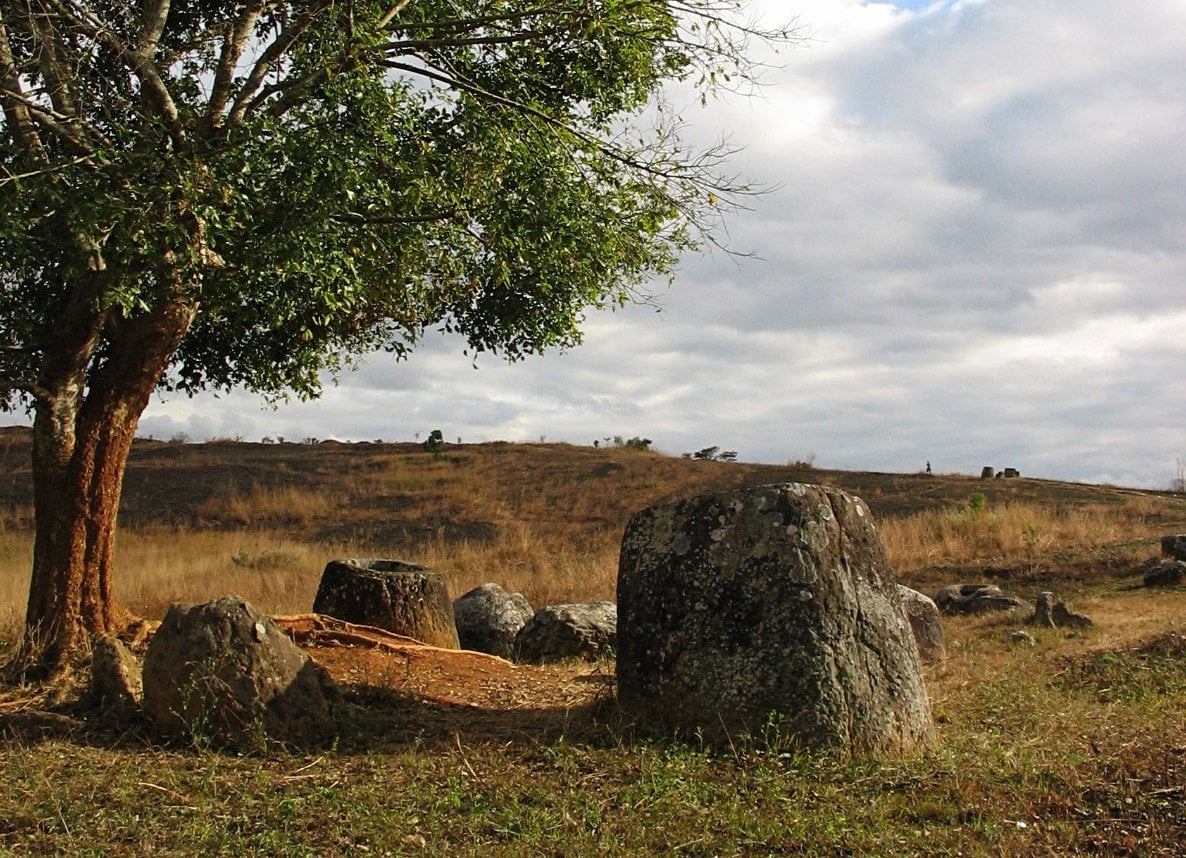
The Plain of Jars, located on Xiang Khuang Plateau, is one of the region’s most mysterious archaeological sites. Dating back over 2,000 years, thousands of massive stone jars - some reaching three meters tall and weighing several tons - are scattered across valleys and foothills. Archaeologists suggest they were linked to ancient burial rituals, as bones and pottery were found nearby. Today, tourists can wander sites like Thong Hai Hin (Site 1) and Site 52, soaking in the peculiar vibe and historic appeal.
6.3. Bagan (Myanmar)
Set along the Ayeyarwady River, Bagan flourished as the Pagan Kingdom’s capital under King Anawrahta in the 11th century. Between the 9th and 13th centuries, over 10,000 temples, stupas, and monasteries were built, with more than 2,000 surviving today. Highlights include Ananda Temple, Dhammayangyi Temple, and Shwezigon Pagoda. Famous for its golden sunrises and sunsets, Bagan offers magical views, especially from hot-air balloons, making it one of the most breathtaking landmarks of Southeast Asia.
6.4. Petronas Twin Towers (Malaysia)
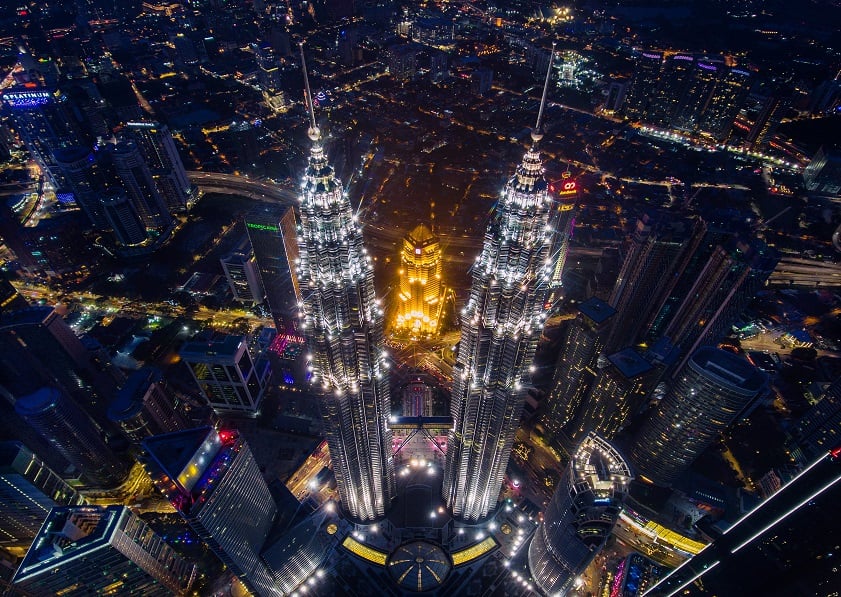
Among architectural landmarks in Asia, the Petronas Twin Towers in Kuala Lumpur stand out. They were designed by architect César Pelli and completed in 1996, symbolizing Malaysia’s leap into modernity. Standing 452 meters tall with 88 floors, the towers showcase Islamic-inspired design with an eight-pointed star floor plan. Tourists can walk across the Skybridge on the 41st floor or admire panoramic views from the observation deck on the 86th floor. By day or night, the towers remain a must-visit in Malaysia.
6.5. Omar Ali Saifuddien Mosque (Brunei)
At the center of Bandar Seri Begawan, Omar Ali Saifuddien Mosque shines as Brunei’s greatest landmark. Commissioned by Sultan Omar Ali Saifuddien, its construction took four years before completion in 1958. Influenced by Mughal design, the mosque gleams with Italian marble, Shanghai granite, English stained glass, and a dome layered in gold. The highlight is its royal barge replica on a reflecting pool. Tourists can explore the grand interior in respectful silence, with robes provided inside.
FAQs about landmarks in Southeast Asia
What are the most famous natural landmarks in Southeast Asia?
Nature lovers should not miss Son Doong Cave, Ha Long Bay, Bali, Komodo National Park, and the Chocolate Hills.
What are the most famous historical landmarks in Southeast Asia?
For a historical journey, explore Angkor Wat, Hue Imperial City, My Son Sanctuary, Ayutthaya Historical Park, and Bagan.
What are some religious landmarks in Southeast Asia?
Notable spiritual sites include Angkor Wat, Borobudur Temple, One Pillar Pagoda, Wat Rong Khun, and Wat Arun.
Which UNESCO World Heritage Sites in Southeast Asia are must-visits?
These are eight famous UNESCO sites: Angkor, Sukhothai Historical Park, Hoi An Ancient Town, My Son Sanctuary, Borobudur Temple, Georgetown & Melaka, Bagan, and the Plain of Jars.
These landmarks in Southeast Asia offer tourists a chance to explore breathtaking landscapes, ancient civilizations, and spiritual wonders all in one region. From iconic temples and historic cities to natural marvels, each site tells a unique story.






.png)
.png)